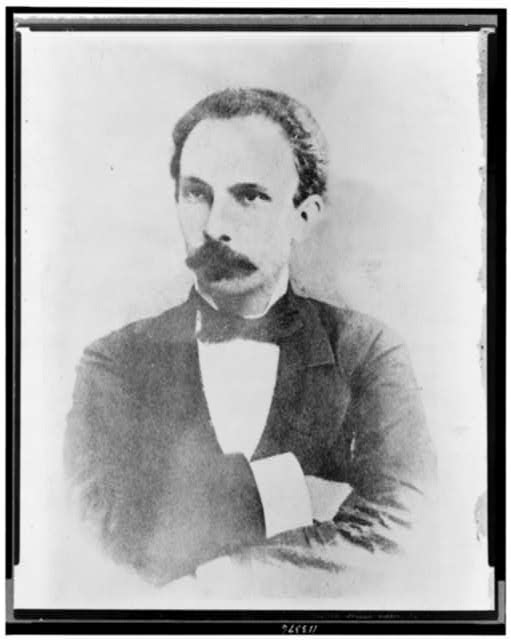
José Julián Martí Pérez (1853-1895)
José Julián Martí Pérez was born on January 28, 1853, in Havana, Cuba. A poet, writer, journalist, philosopher, and revolutionary leader, he is considered Cuba's national hero and the "Apostle of Cuban Independence."
Martí dedicated his life to the struggle for Cuba's independence from Spanish rule and to the promotion of democratic and humanistic ideals. His literary work and political thought profoundly influenced Latin America and the Spanish-speaking world.
He died in combat on May 19, 1895, in Dos Ríos at the age of 42, becoming a martyr of the Cuban independence cause. His legacy endures as a symbol of freedom, justice, and human dignity.
Major Works
Versos Sencillos (1891)
His most famous poetic work, which includes the verses of "Guantanamera." A collection of poems reflecting his love for Cuba, nature, and freedom.
Ismaelillo (1882)
A poetry collection dedicated to his son José Francisco. Considered a precursor to literary modernism in the Spanish language, it marked a turning point in Spanish-American poetry.
Nuestra América (1891)
A fundamental essay expressing his vision of Latin American identity and the need for continental unity against colonialism and imperialism.
La Edad de Oro (1889)
A children's magazine he founded and wrote, intended for the children of America. It combines education, morality, and literary beauty to form free and dignified citizens.
Abdala (1869)
A drama written at age 16 showing his early patriotic commitment. The work deals with sacrifice for one's homeland and freedom.
Diario de Campaña (1895)
His final notes during the War of Independence, up to days before his death in combat. A historical document of great value.
Timeline
Literary and Political Legacy
José Martí is considered one of the great masters of prose and verse in the Spanish language. His modernist style profoundly influenced Spanish-American literature, preceding and preparing the ground for the literary boom of the 20th century.
As a political thinker, Martí promoted ideals of social justice, Latin American unity, and human dignity that transcended his era. He warned about the dangers of imperialism and advocated for a free, educated, and prosperous Latin America.
The National Hero
Martí is venerated in Cuba as the national hero par excellence. His figure transcends political ideologies, being claimed by both those who support and those who oppose the current regime. His image and words are present throughout the island.
Beyond Cuba, Martí is recognized throughout Latin America as a champion of freedom and continental identity. His writings on "Our America" remain fundamental to understanding Latin American identity.
Universal Influence
Martí's thought on education, democracy, social justice, and human dignity remains relevant in the 21st century. His verses continue to be recited, his essays studied, and his example of integrity and sacrifice admired throughout the Spanish-speaking world.